

If you have booked a balloon flight, there is a real chance it will not happen on the morning you planned. Depending on the region and the season, somewhere between a fifth and half of scheduled flights are cancelled, and almost all of them are cancelled for weather. This is not a sign of a bad operator. A balloon is the only aircraft with no steering and no engine to fight the air, so the pilot’s only real control is the decision to fly or not. Understanding what drives that decision makes the waiting far easier to bear.
Wind is the whole story
A balloon travels at exactly the speed of the wind around it. The envelope of a passenger balloon is a sail the size of a small house, and inflating it on the ground in anything more than a light breeze is difficult and can be dangerous for the crew. The landing is the other end of the same problem: a basket touching down at fifteen knots of ground speed will tip over and drag, and no pilot wants to do that with paying passengers on board.
For those reasons most commercial operators set a surface wind limit somewhere between 8 and 10 knots, roughly 15 to 18 kilometers per hour. Small baskets can accept a little more; large baskets carrying sixteen or twenty people are more conservative. Gusts count more than averages, and a forecast of 6 knots gusting 14 is a no. The limit applies at launch and at the expected landing time, which is why a perfectly calm launch field can still produce a cancellation if the forecast shows the wind picking up an hour later.
Wind aloft matters too, in a different way. A pilot needs a workable direction, and a landscape with somewhere to land at the end of it. If the upper wind will carry the balloon over a city, a lake, a forest or a border, there is nowhere to come down, and the flight is off even if the field is dead calm.
Thermals, rain and fog
The second reason balloons fly at dawn and in the last hours before sunset is thermal activity. Once the sun has been up for a couple of hours, the ground heats unevenly and columns of rising air begin to form. Thermals push a balloon up and down without warning and make the burner almost useless as a control, and in strong conditions they can partially collapse an envelope. Pilots will not fly through the middle of a summer day for exactly this reason, and a morning forecast that shows early instability, often visible as puffy cumulus clouds building fast, is enough to cancel.
Rain is a straightforward no. Water on the envelope adds weight, cools the air inside and ruins the fabric coating over time, and the visibility and cloud base that come with rain are usually below legal minimums anyway. Showers passing nearby are also a problem, because they produce gust fronts that arrive with no warning.
Fog is the most frustrating cancellation because the morning looks so beautiful. Ballooning is a visual flight activity, and the pilot must be able to see the ground and be seen by other aircraft. A thin mist that will burn off in an hour is often worth waiting for. Thick valley fog with no wind to shift it is not, and by the time it clears the thermals have started.
The pibal test
Before every flight, the pilot releases a small helium balloon and watches it climb. This is the pibal, short for pilot balloon, and it is the single most useful piece of weather equipment in ballooning. As it rises through the first few hundred meters, it reveals the wind at every level: how fast, in which direction, and whether the direction turns with height. A pibal that drifts gently and steadily one way is a good sign. One that shoots off sideways at a hundred meters, or wobbles and stalls, tells the pilot the air is not settled.
Watching the pibal is the best moment to understand the decision. Many pilots will explain what they are seeing if you ask. The decision usually comes within twenty minutes of the pibal, often after a second one.
What the waiting game looks like
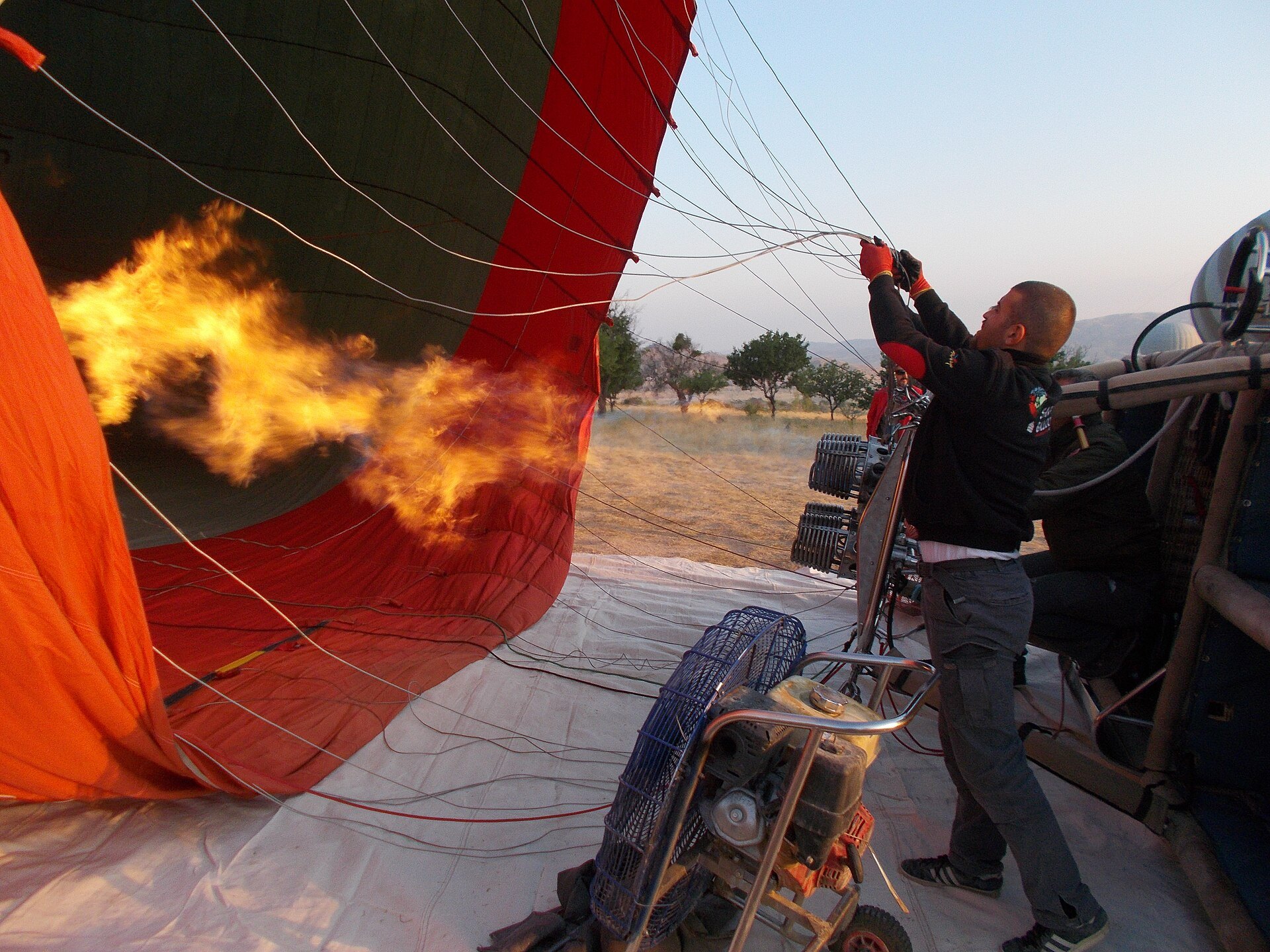
A typical morning runs like this. You are asked to be at the meeting point an hour or more before sunrise. The pilot has already checked forecasts, radar and any local weather stations, and will often have a good idea before you arrive. If the forecast is marginal you may be driven to the launch field anyway, because conditions on the ground are the only ones that count. There the crew unloads, the pibal goes up, and you wait. Sometimes an envelope is laid out and partly inflated before the call is made. A cold inflation is itself a test of how the air is behaving.
The honest answer to how long you might wait is anywhere from ten minutes to an hour and a half. Most operators try to make the call early, but late cancellations happen and they are the right call.
Rescheduling, refunds and how to plan around it
Almost every operator we know of offers a free reschedule for a weather cancellation, usually with a voucher valid for one to two years. Full refunds are less universal. Some operators refund automatically, others refund only if you cannot rebook within the voucher period, and a few offer refunds only for flights booked directly rather than through a third party. Read the terms before you pay, and ask specifically what happens if you have travelled from abroad and cannot come back.
There are ways to stack the odds.
- Book for the first or second day of your stay, not the last, so a cancellation can be moved
- Choose the morning slot; evening flights are cancelled more often because of thermals and building wind
- Prefer stable seasons: autumn in Europe and North America, late spring and early autumn in dry regions
- Check whether the operator flies from more than one site, which gives the pilot more options
- Keep the day after your flight free of early commitments
One last thing. If you find yourself driving home in the dark without having flown, remember what a cancellation means: a pilot looked at the sky and decided your safety mattered more than the revenue. That is exactly the person you want to fly with next time.
Read next: Hot Air Balloon Ride Cost: What Shapes the Price You Pay
