
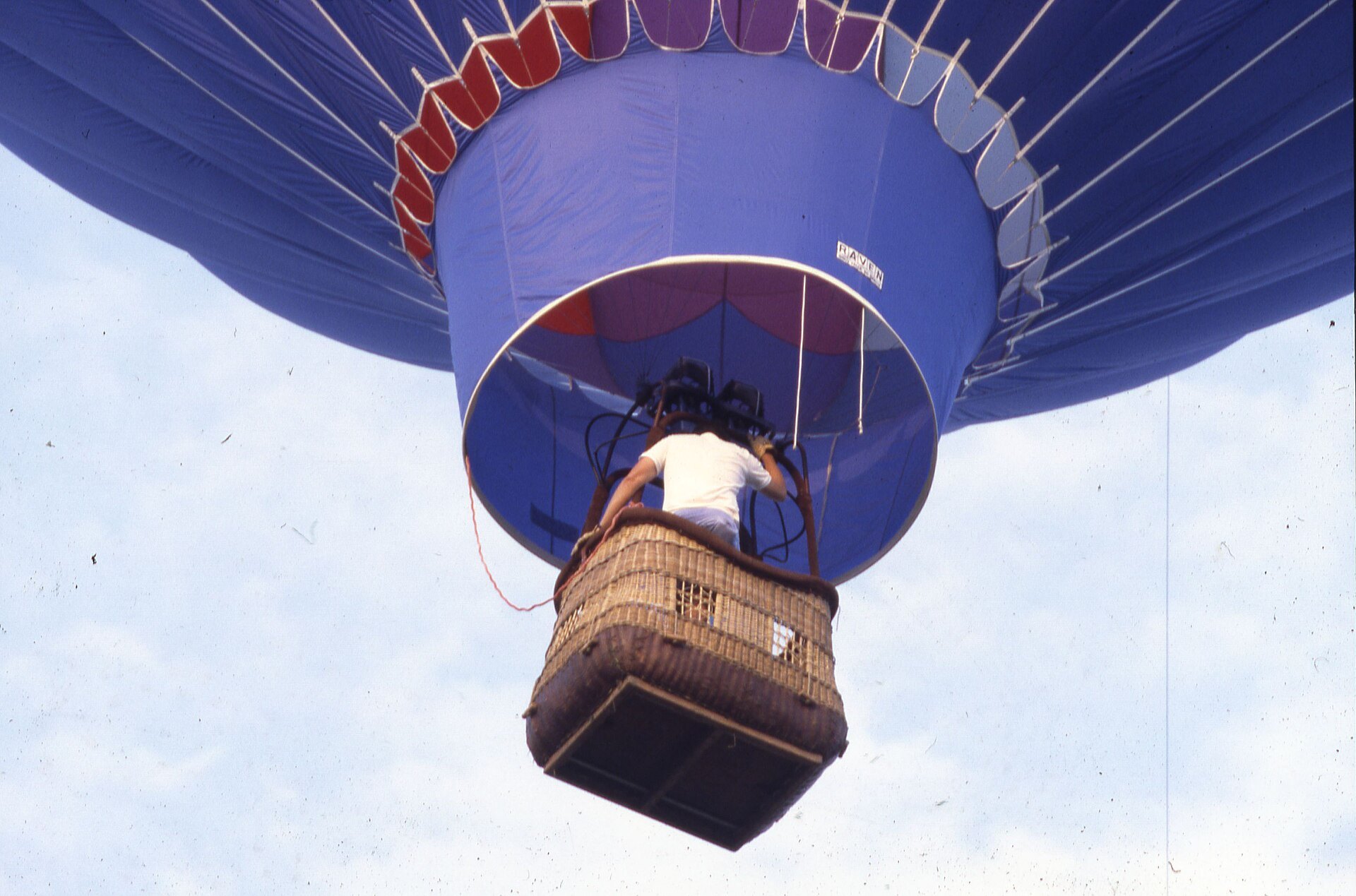

A hot air balloon has no rudder and no runway, and it is tempting to imagine that anyone with a match and a sense of adventure can fly one. The truth is that a balloon is an aircraft in law as well as in fact, and the person next to you in the basket holds a pilot certificate earned through structured training, written examinations and flight tests. We are often asked what that training involves and what a passenger is entitled to ask before climbing aboard. This is our attempt at a plain answer.
Two systems, one idea
Most of the world’s balloon pilots are licensed under one of two frameworks. In the United States the Federal Aviation Administration issues pilot certificates in the lighter-than-air category, with a balloon class rating and, for the balloons this magazine is mostly about, a hot air with airborne heater rating. In the European Union and the other states that follow the European Union Aviation Safety Agency, the document is the Balloon Pilot Licence, or BPL, defined in a set of rules called Part-BFCL that came fully into force in 2020 and replaced a patchwork of national licences.
The two systems differ in detail but share the same shape: a minimum amount of instruction, a period flying alone, a theory examination and a practical test with an examiner, followed by a second, higher level of qualification for anyone who wants to fly passengers for money.
The private certificate
An FAA private pilot certificate for balloons requires at least 10 hours of flight training, including at least six training flights with an instructor, two of which must last at least an hour, one controlled ascent to at least 2,000 feet above the launch site, and two solo flights. A student can begin at 14 and hold the private certificate at 16. There is a written knowledge test covering regulations, weather, aerodynamics of the balloon, navigation charts and airspace, followed by an oral and flight test with a designated examiner. In practice most students fly well beyond the minimum, because every flight depends on the weather cooperating at dawn.
The EASA BPL asks for at least 16 hours of flight instruction, of which at least 12 hours are dual with an instructor, including 10 inflations and 20 take-offs and landings, plus a supervised solo flight of at least 30 minutes. The theory examination is broken into nine subjects: air law, human performance, meteorology, communications, principles of flight, operational procedures, flight performance and planning, aircraft general knowledge, and navigation. The skill test follows. EASA also divides hot air balloons into four groups by envelope volume, from Group A at up to 3,400 cubic metres to Group D above 10,500 cubic metres, and a pilot must complete familiarisation training before moving up to a larger group.
The commercial certificate
Flying paying passengers is a different matter. In the United States a commercial balloon pilot must be at least 18 and have logged at least 35 hours of flight time as a pilot, of which at least 20 hours are in balloons, including a specified number of flights in hot air balloons with an airborne heater, solo flights and a controlled ascent to 3,000 feet. There is a second, harder written examination and another practical test. For many years no medical certificate was required of any balloon pilot in the US; after a fatal accident in Texas in 2016, a rule change in 2022 required commercial balloon pilots carrying passengers for hire to hold a second-class medical certificate, the same standard as a commercial aeroplane pilot.
Under EASA, commercial privileges are added to the BPL rather than issued as a separate licence. The pilot must be at least 18, have at least 50 hours of flight time and 50 take-offs and landings as pilot in command of balloons, hold a Class 2 medical certificate and pass a further skill test with an examiner.
What the training actually teaches
The syllabus on paper hides the real substance of balloon training, which is judgement. A balloon pilot spends a surprising amount of time studying meteorology, because the wind is the only steering mechanism a balloon has. Students learn to read surface winds, winds aloft forecasts, temperature inversions and the way a valley drains cold air downhill at dawn. They learn why balloons fly in the first two or three hours after sunrise and the last two before sunset, when the air is stable, and why thermals, gust fronts and approaching weather fronts end a flying day.
The flying itself is about anticipation. A balloon responds to the burner with a lag of many seconds, so the pilot learns to act before the balloon needs it: to burn early on approach to a landing, to vent before reaching a chosen altitude, and to keep a landing field in sight at all times. Every student practises low-level contour flying and landings in wind that would make a novice wince.
The crew chief
No balloon pilot flies alone, even on a solo flight. Behind every launch is a ground crew led by a crew chief, and a pilot’s training is incomplete without learning to run one. The crew chief is responsible for laying out the envelope, running the inflation fan, holding the crown line as the balloon stands up, steadying the basket at launch, and then following the flight by road with a radio, guessing where the pilot will land and arriving there in time to help. On commercial operations the quality of the crew is as good a sign of a serious outfit as the paperwork in the basket.
What a passenger should ask
Because a balloon ride feels informal, people rarely ask the questions they would ask of any other aircraft. They should. A pilot carrying paying passengers must hold a commercial certificate, and every honest pilot is happy to show it. A few things worth asking about before you book:
- Whether the pilot holds a commercial balloon certificate or BPL with commercial privileges, and roughly how many hours they have flown.
- Whether the balloon has a current airworthiness certificate and inspection; in the US an inspection is required every 100 flight hours or every 12 months, whichever comes first.
- Whether the operation is insured for passenger carrying.
- What the pilot’s weather limits are, and whether they cancel flights when the forecast is marginal.
The last question is the most revealing. A pilot who cancels readily is a pilot who has absorbed the real lesson of training, which is that the certificate is the beginning of judgement, not the end of it.
