
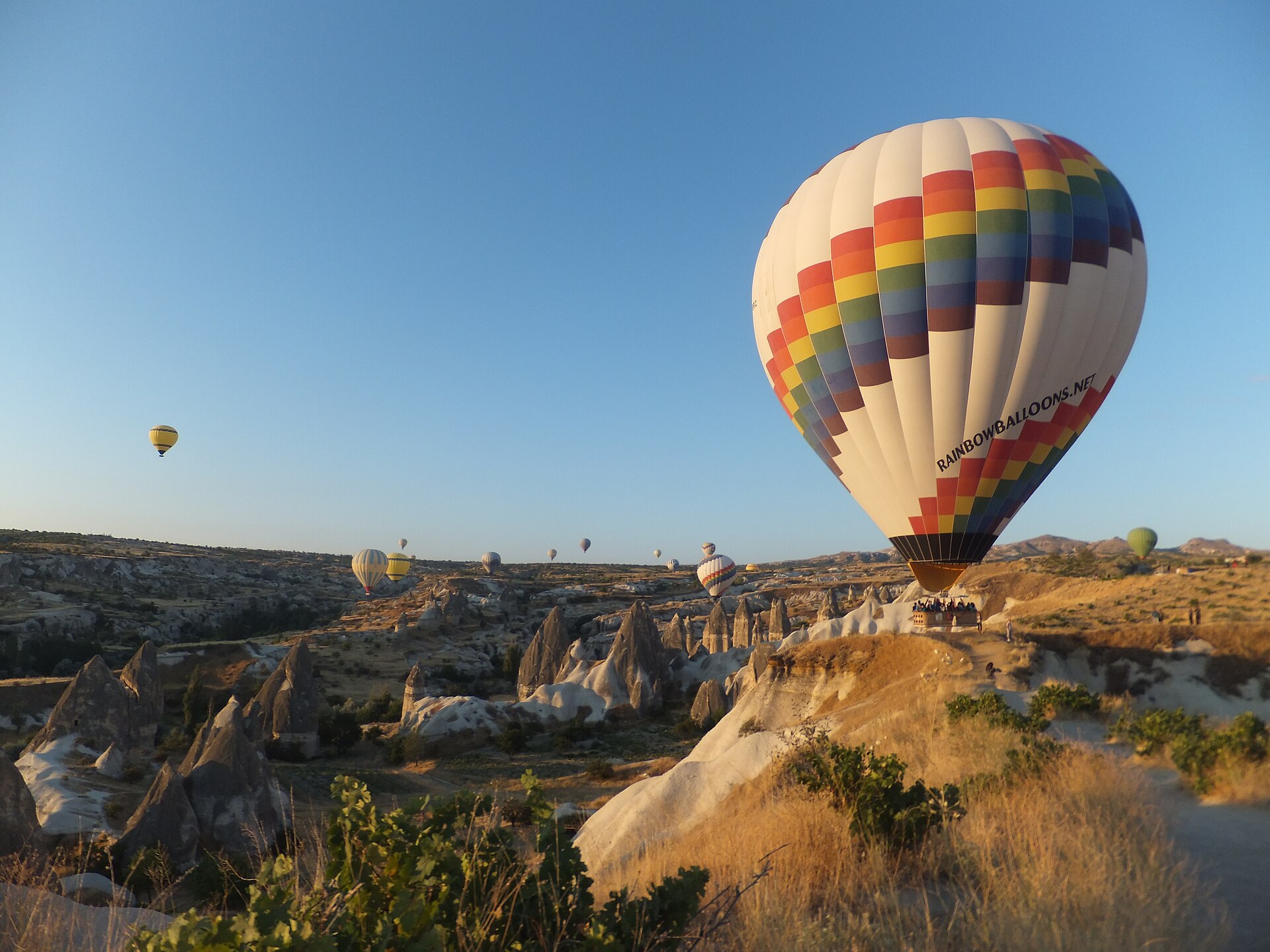

There is no single price for a hot air balloon ride, because the figure on the booking page reflects a chain of costs: the aircraft, the people who run it, the logistics around each flight and the size of the group. This guide explains what sits behind that figure and what to compare between operators. It does not quote exact prices, since they change by region, season and flight type, so treat any number you see as a starting point for questions.
What does a hot air balloon ride cost, and why is there no standard price?
A balloon flight is closer to a small chartered aircraft trip than to a ticket for a fixed attraction. Operators set their prices by weighing what each launch costs them against how many passengers can share it. That is why two flights that look alike in a brochure can differ widely on the invoice.
Several things push the price up or down:
- The size of the group in the basket, from a private flight for two to a larger shared one.
- The time slot and the season, since the best flying conditions are limited to certain hours and months.
- The extras bundled in, such as a toast, a snack, photos or transport back to the starting point.
- The location, because popular tourist regions tend to have many operators and strong demand at the same time.
Rather than hunting for a single typical number, it is more useful to understand these levers. Once you know them, you can read any quote and see what you are actually buying.
What are you paying for behind the scenes?
Most of the money you hand over never touches the part you see, which is the hour in the air. It pays for a whole operation that starts well before sunrise and ends after the balloon is packed away.
The aircraft and its upkeep
The envelope, basket and burner are working aircraft parts, and they need regular inspection. One commercial operator in Canada says a certified Aircraft Maintenance Engineer inspects its equipment, and that it holds a Special Flight Operations Certificate for commercial ballooning. Inspections, repairs and eventual replacement of fabric and burner components are a standing expense that has to be spread across every passenger who flies.
The pilot and the paperwork
Commercial flying is regulated. That same Canadian operator states that each of its pilots holds certification from Transport Canada. Training, certification and the insurance that goes with carrying paying passengers are costs you share, whether or not the booking page lists them.
Fuel
Balloons are heated by propane burners, so every minute of flame has a cost. Exact fuel consumption varies with the balloon, the load and the weather, and the sources reviewed here give no consumption figure, so it is best to think of fuel simply as one of the largest running costs of each flight.
The ground crew and the chase vehicle
A balloon does not land where it took off. The same Ottawa-area operator notes that passengers may need to walk some distance from the balloon to the chase vehicle, which shows how much of the operation happens on the ground. A crew lays out and inflates the envelope, follows the flight by road and recovers the balloon and passengers after landing. That means vehicles, drivers and time, all of which are built into the fare.
What does a typical ticket include?
The inclusions are where similar-looking offers often differ most. As an example, one family-run operator in Ontario describes a package built around a long outing with roughly one hour in the air. It lists a traditional champagne toast, light snacks after the flight, transport back to the launch site and shared photos of the flight, including a launch photo. Both alcoholic and non-alcoholic versions of the toast are offered.
Notice what that description tells you. The hour in the air is only a part of the time you commit to, which also covers check-in, transport, inflation, landing and pack-up. An operator in the Ottawa and Gatineau area makes the same point, advising you to set aside a good part of the morning or evening, and inviting passengers to help with setting up and packing away as part of the experience.
When you compare quotes, line up the same items side by side:
- Is transport back to the launch site included?
- Is there a toast or food, and is there a non-alcoholic option?
- Are photos shared or sold separately?
- How long is the whole experience, not only the airtime?
Which hidden costs and conditions should you check before you book?
The ticket price rarely tells the whole story. A few conditions can change what you end up spending, or whether you fly at all, so read the terms before paying.
Weather and rescheduling
Balloons fly only in light winds and without rain, snow or fog. One operator warns that you may need to reschedule several times before conditions allow a safe flight, and that purchases are non-refundable. Another allows you to move to a different available day if the weather is unsuitable, but asks for 72 hours of notice for cancellations or schedule changes. These rules matter as much as the headline price, because a rigid policy can turn a cheap booking into an expensive one if your plans shift.
Voucher validity
If you buy a gift voucher, check how long it lasts. One operator states that its vouchers stay valid for 12 months from the purchase date. Given how often flights are postponed, a short validity window can leave you with a voucher you cannot use in time.
Weight and eligibility limits
Safety rules can affect who may fly together. One operator caps the combined passenger weight at 650 pounds for its three or four passenger flights and 350 pounds for its two passenger flights. It also lists groups who will not be permitted to fly, including pregnant women, young children who cannot see over the side of the basket and people with certain medical conditions. Finding this out on the morning of the flight is an avoidable disappointment, so ask about limits when you book.
Timing and logistics
Meeting times follow sunrise and sunset. The Ontario operator says its morning flights meet around sunrise, which could fall anywhere between 4:30am and 7:30am depending on the month, and its evening flights meet two to three hours before sunset. Early starts and a meeting point announced the night before are part of the deal, so check that the plan fits your own travel arrangements.
Why is the cheapest flight not always the best choice?
A low price can be perfectly legitimate, but it deserves a few questions. Because ballooning is regulated and the equipment needs constant inspection, the main costs of running a safe operation cannot be removed, only squeezed. Hot air ballooning has a strong safety reputation, and the international air sports federation has named it the safest air sport in aviation, but that record depends on operators doing the unglamorous work well.
Before choosing on price alone, ask the operator:
- Are the pilots certified by the national aviation authority, and does the company hold the required commercial operating certificate?
- Who inspects the equipment, and how is that documented?
- How is the decision to fly or cancel made, and who makes it?
- How many passengers will be in the basket, and what is the weight limit?
A confident operator answers these plainly. Vague replies, or pressure to pay immediately, are worth noting. Operators also tend to be open about the weather decision. One explains that it picks the meeting time and place the evening before a morning flight, and updates its flight status line late that night, based on wind speed, wind direction and sunrise time. That kind of transparency is a good sign.
How can you get better value without cutting corners?
Saving money on a balloon flight is possible, but the sensible savings come from planning, not from lowering safety standards.
- Book early. One operator suggests reserving at least a week or two ahead, though it may sometimes take last-minute requests. Earlier booking gives you more choice of dates if the weather forces a change.
- Stay flexible. Keeping a spare day in your itinerary protects you from paying for a second trip.
- Compare inclusions, not only totals. A slightly higher price that covers transport, refreshments and photos may cost less than a cheap fare with extras added later.
- Read the cancellation terms. Understand what happens if the weather turns, and how much notice you must give if you need to move your own date.
- Choose group size deliberately. Smaller baskets cost more per person, but they offer a more personal flight. A larger shared flight lowers the cost if you are comfortable in a crowd.
- Weigh the destination. Regions with many operators can offer more choice, while remote or heritage areas may charge more because of limited availability. Look at what the landscape offers before deciding that a higher price is not worth it.
In the end, the best value is the flight that goes ahead safely, on a day you can actually attend, with no surprises in the terms. A clear idea of what each part of the price covers will help you judge any offer on its merits.
Related reading
- What to Pack for Your First Hot Air Balloon Adventure
- Success in managing small adventure business operations
Sources
- Ontario Hot Air Balloon Rides (ontariohotairballoonrides.com, accessed 2026-11-02)
- Your local Ottawa/Gatineau Hot Air Balloon Operator (ottawahotair.ca, accessed 2026-11-02)
- Hot air ballooning — Wikipédia (en.wikipedia.org, accessed 2026-11-02)
Photo: Hot Air Balloon Launch (Unsplash), by Songeunyoung songeunyoung, CC0 (Wikimedia Commons)

