

A balloon flight is not cheap, and it is worth understanding why before you compare prices. Behind every hour in the air there is an aircraft that costs as much as a house, a licensed pilot, a crew of two to four people, a chase vehicle, a great deal of propane, insurance, and a launch site rented from a farmer. Divide that by the number of passengers a basket can carry and you arrive at the figures below. We do not sell flights, so treat these as honest ranges gathered from published prices rather than a recommendation.
Typical prices by region
Central Turkey is the busiest balloon destination on earth and, because of the sheer volume, one of the cheapest per person. A standard morning flight of about an hour in a large basket typically costs 200 to 350 EUR, roughly 220 to 380 USD, with prices rising in the peak months of spring and autumn and falling in winter. Smaller baskets and longer flights run 400 to 600 EUR.
In Western Europe expect 200 to 350 EUR per person for a shared flight in France, Germany, the Netherlands, Austria or Spain, and 250 to 400 EUR in Switzerland or the United Kingdom, where a shared flight is commonly 180 to 300 GBP. Alpine winter flights over snow, which are longer and need more fuel, sit at the upper end or above it.
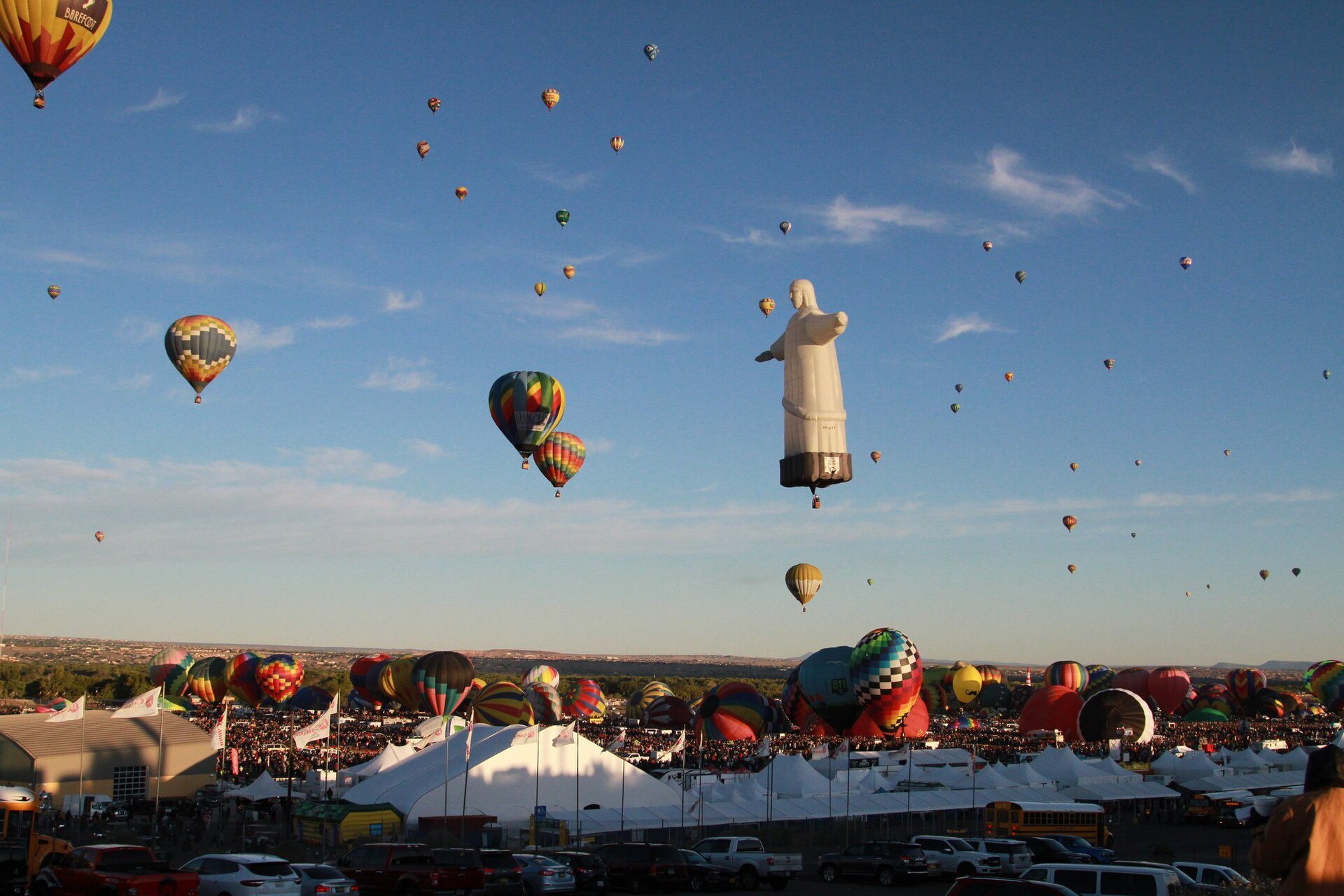
In North America a shared flight of forty-five minutes to an hour typically costs 250 to 400 USD per person in most states and provinces, and 300 to 500 USD in high-demand areas such as wine regions and the desert Southwest. Festival flights during the big autumn gatherings can be more.
African safari flights are the most expensive category. A dawn flight over the great plains of East Africa, with a bush breakfast on landing, is commonly priced at 450 to 600 USD per person and is often sold as an optional extra through your lodge. The cost reflects remote logistics, park fees and the small number of flights each aircraft can make in a season.
Elsewhere, expect 250 to 400 USD in Australia and New Zealand, 150 to 300 USD in Mexico and much of South America, and 100 to 250 USD in Southeast Asia and parts of Eastern Europe, where lower operating costs bring prices down without necessarily lowering standards.
Shared baskets, private baskets and what they change
The price you see advertised is almost always for a place in a shared basket. Depending on the region that means anything from a basket of six to a basket of twenty-four with partitions. Larger baskets are not worse, but you will have less room to move and your view will be shared. Some operators charge a modest premium, typically 20 to 40 percent, for a smaller basket of eight or fewer.
A private flight for two usually costs between 800 and 1,500 EUR in Europe and 900 to 2,000 USD in North America, which is the price of the whole aircraft for the morning rather than two seats. Private flights are the standard choice for proposals and anniversaries, and the practical solution for a family with young children. In Central Turkey, where private baskets are more common, expect 1,200 to 2,500 EUR.
What is normally included
Almost every commercial price includes the pilot, the crew, all safety equipment, third-party liability insurance and a certificate of flight. Beyond that, it varies.
- Hotel pick-up and return: standard in tourist regions, rarely included elsewhere, where you drive to a meeting point
- Transfer back from the landing site: always included, because you cannot land where you launched
- The post-flight toast: usually included, usually sparkling wine, with juice for children and non-drinkers
- Breakfast: included in Africa and many premium flights, sometimes a light snack, sometimes nothing
- Photos: a crew member’s photos are often offered for an extra 20 to 50 EUR or USD
- Passenger accident insurance beyond liability cover: not standard, and worth checking against your travel policy
- Taxes and park or national forest fees: sometimes added at checkout
The champagne toast is not a marketing invention. It dates back to the first manned flights in France in 1783, when early aeronauts carried wine to placate startled farmers who thought a fire-breathing monster had landed in their field. It has been part of the ritual ever since, and a good operator will treat it as the moment to thank the landowner as well as the passengers.
Insurance, regulation and why it costs what it costs
In most countries a passenger-carrying balloon must be certified as an aircraft, inspected annually, and flown by a pilot holding a commercial balloon licence. Operators must carry liability insurance for passengers and third parties, and the premiums are substantial. The envelope itself has a limited life of a few hundred flight hours before the fabric fails a porosity test and must be replaced, which is one of the largest costs in the business. If a price seems far below the local range, ask which of these things has been skipped.
A second hidden cost is cancellation. Because a fifth to a half of flights are cancelled for weather, an operator effectively runs the crew and vehicles for mornings that generate no revenue. That is built into every ticket.
Tipping and other customs
Tipping is not expected in most of Europe, where crews are salaried and prices include service. A small tip is appreciated but never assumed. In North America tipping the pilot and crew is customary, in the range of 10 to 20 percent of the ticket or a flat 20 to 50 USD per passenger, often handed to the pilot to share. In Central Turkey and in Africa a tip of 10 to 20 EUR or USD per passenger is welcome and commonly given. Where crews are local farm workers hired by the morning, as they often are, a tip goes directly to people who were up at four to carry a two-hundred-kilogram envelope for you.
How to judge value rather than price
The cheapest flight is rarely the best value. Look at the basket size and the flight duration, ask about the pick-up and the toast, check the cancellation and refund terms, and read recent reviews for how the operator handles a weather cancellation. A flight that costs 50 EUR more but comes with a small basket, a longer flight and a straightforward refund policy is usually the better deal. Whatever you pay, the view at sunrise is the same for everyone.
Read next: Hot Air Ballooning Safety: Rules, Checks and What Pilots Watch For
