
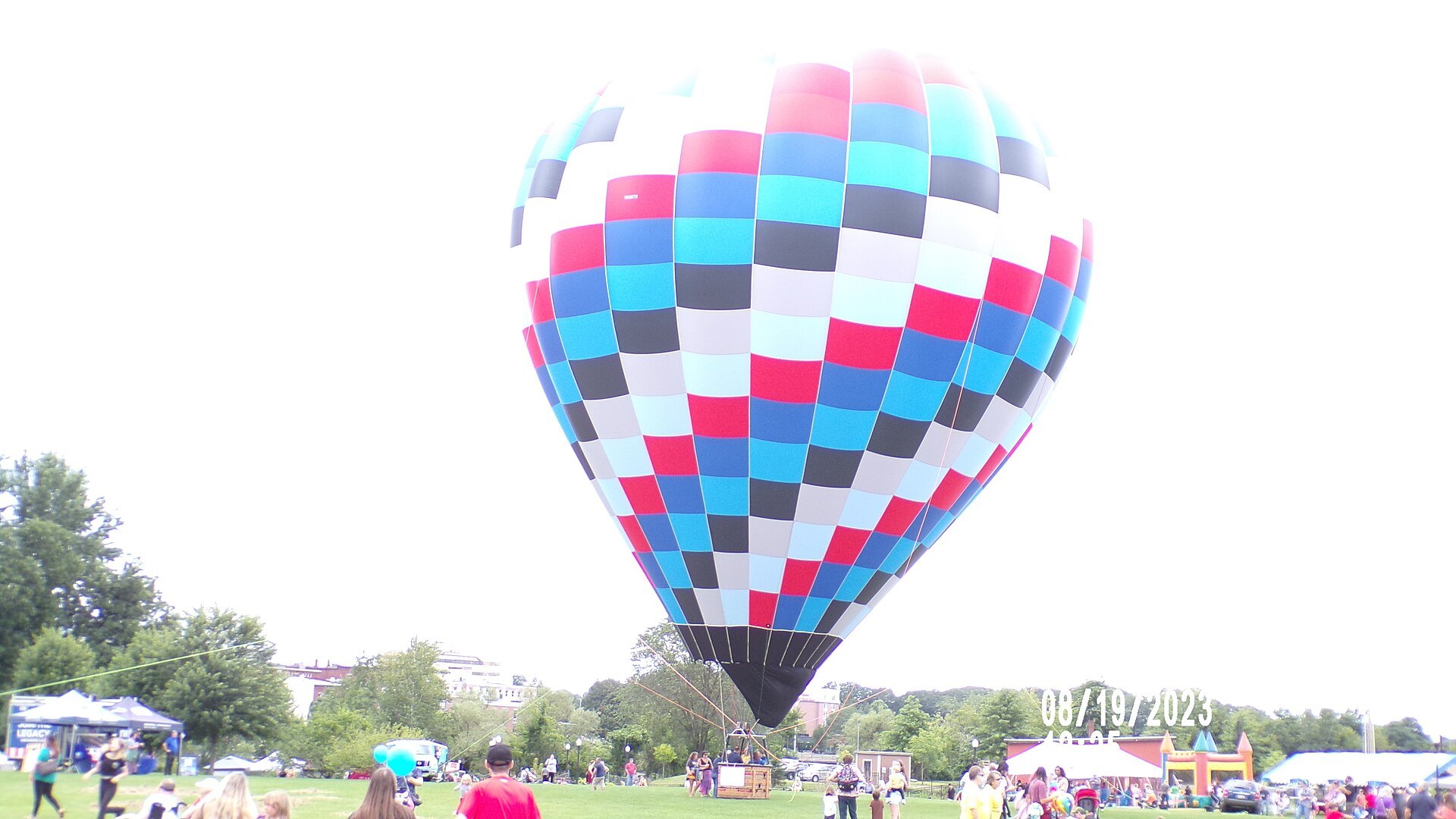

Three generations in one basket is one of the loveliest things a balloon flight can offer, and also one of the questions we get asked most anxiously. Can a six-year-old fly? Can a grandmother of eighty? What about someone who walks with a stick? The short answer is that ballooning is gentler than most people expect, but the limits that exist are real, they come from physics rather than marketing, and they are worth understanding before you book for the whole family.
Minimum ages and why they vary
There is no international legal minimum age for balloon passengers. Each operator sets its own, and the typical range is five to eight years old. A few will take younger children on private flights with a parent, and a few set the bar at ten or twelve. The reasoning is practical rather than legal. A child has to stand still for an hour, follow instructions at the landing, hold on with both hands and stay crouched until the pilot says otherwise. Most five-year-olds can do that with a parent beside them; most three-year-olds cannot, and a wriggling toddler in a basket that is about to land is a risk to everyone.
Operators also think about the drive and the wait. A family day out that starts at four in the morning, includes an hour in a cold field and may end in a cancellation is a lot to ask of a small child, and a good operator will say so honestly.
Height matters more than age
The real question for a child is whether they can see out. The sides of a passenger basket are typically 1.1 to 1.2 meters high, which is roughly the height of a six-year-old. A child shorter than the rim sees wicker and nothing else, which is a sad way to spend an expensive morning. Many operators therefore set a minimum height, commonly 1.2 meters or about 4 feet, rather than an age. Some carry a small step or a wooden box that a child can stand on, but this is at the pilot’s discretion, and the child must step down for the landing. If your child is close to the limit, ask.
Lifting a child to see over the edge is not allowed, and pilots will stop you. Balancing a small body on the rim of a basket at three hundred meters is exactly as dangerous as it sounds.
Weight, balancing and surcharges
Every balloon has a maximum lift, which depends on the size of the envelope, the temperature of the day and the altitude of the launch site. The pilot works out the total load before every flight, and passengers are weighed or asked their weight at booking for that reason. The pilot needs an accurate number, and a polite operator asks discreetly.
Weight also affects balance. A large basket is divided into compartments, and the pilot places passengers so that the load is even across the floor. A very heavy passenger on one side makes the basket tilt on landing, so operators may ask a passenger over a stated weight, often around 120 kilograms or 260 pounds, to book two places or a private basket. The surcharge covers the seat that cannot be sold, not a penalty. Children are counted at their actual weight, and some operators offer a reduced child fare, typically 20 to 40 percent off, for passengers under twelve.
Seniors: the landing is the only real test
There is no upper age limit in ballooning, and we have met passengers in their nineties who flew and loved it. What matters is not the number but three physical abilities. You must be able to climb into the basket, which usually means stepping over a rim about 1.1 meters high from a step or a crew member’s knee, sometimes with a hand from the pilot. You must be able to stand for about an hour, because there are no seats in a standard basket, though some operators fit a small bench. And you must be able to adopt the landing position: knees bent, back to the direction of travel, both hands on the rope handles, and stay there through one or two bumps.
That last point is the important one. In calm air a basket lands upright and gently. In a light breeze it may bounce, tip onto its side and slide for a few meters, and passengers end up lying on their backs looking at the sky. It is not dangerous if you are holding on and crouched, but it is not something a person with a fragile hip, a recent operation or severe osteoporosis should do. Pilots will ask, and the honest answer protects you.
Walking sticks and light mobility aids are usually fine for getting to the basket but travel in the chase vehicle, not in the air. A few operators in Europe and North America run wheelchair-accessible baskets with a door and a seat, and they are worth seeking out for a passenger who cannot stand for long or step over the rim.
Best flight types for families
The following shape the experience more than the price does.
- Small shared baskets of six to eight are calmer for children and easier for grandparents than baskets of twenty
- A private basket for four or six lets the family stay together and removes any minimum-age worry
- Short flights of thirty to forty-five minutes suit younger children better than the full hour
- Tethered flights at festivals, where the balloon rises on ropes and comes back down, are ideal for very small children and nervous seniors
- Evening flights avoid the pre-dawn wake-up, though they are cancelled more often
- Festivals give children the show on the ground, with dozens of balloons inflating, even if nobody flies
Preparing the family for the morning
Brief everyone the night before about the early start, the cold field and the real possibility of not flying. Children cope with a cancellation far better if they knew it might happen. Pack snacks, warm layers, closed shoes for everyone and a change of trousers for the smaller passengers. At the briefing, make sure each child stands beside an adult and practises the crouch position on the ground. In the air, let the child stand at the rim on the side the pilot indicates, and keep a hand on their shoulder. At the landing, do exactly what the pilot says, wait until you are told to climb out, and let the children help carry the envelope. Ask any eight-year-old afterwards what the best part was, and it will be the pack-up.
