

Hot air ballooning is regarded as one of the safest air sports, and the reasons are practical rather than lucky: licensed pilots, inspected aircraft and a strong habit of staying on the ground when the weather is wrong. This article walks you through the rules, the checks and the decisions that sit behind a routine flight, and it is honest about where the rules are tighter or looser depending on the country.
How safe is hot air ballooning, really?
The short answer is that serious accidents are rare, but it helps to understand what that claim rests on. The international air sports federation, the FAI, has recognised ballooning as the safest air sport in aviation, and fatal balloon accidents are described as rare in United States safety board statistics. Some commercial operators also point out that balloons carry no engine that can fail, and that pilots make cautious go or no-go decisions before anyone climbs aboard.
Numbers deserve some care, though. Figures for balloons are small, because the activity itself is small compared with airline travel, and different websites quote them in different ways. A fleet count, a ride count and an accident count are three separate things, and a single year with no fatal accidents does not prove much on its own. Treat the safety record as encouraging, and let the details below tell you what actually produces it.
It also helps to know that safety is not identical everywhere. A balloon flight is a regulated aviation activity, but how closely a national authority supervises passenger operators varies. That is one reason it is worth asking questions before you book, which the last section covers.
Who is allowed to fly you, and what does a pilot have to prove?
Carrying paying passengers is a professional job, and the qualification requirements reflect that. The details depend on where you fly, so here are two examples from the sources.
In the United Kingdom
The Civil Aviation Authority is the independent aviation regulator, and commercial pilots need a Commercial Balloon Pilot Licence issued under the UK balloon flight crew licensing rules. To earn it, a pilot sits exams covering meteorology, air law, navigation, human performance and balloon systems, and then takes a flight skills test with a certified examiner. One UK operator notes that its pilots repeat the skills test every year and take a Class 2 medical examination every five years, as the regulations require.
Companies selling paid flights must also hold a Balloon Air Operator’s Certificate, which is permission from the regulator to run commercial balloon flights. It comes with a safety management system, meaning written procedures for managing risk rather than relying on individual habits.
In the United States
A pilot who carries passengers must hold a Commercial Pilot Certificate for lighter-than-air aircraft from the FAA. That means supervised flight time, a written knowledge test covering navigation, weather and emergency procedures, and a practical check ride with an FAA examiner. You can think of it as a driving licence, only far more demanding.
If you want a deeper look at how pilots progress, the article on how a balloon pilot is trained and licensed covers the path in detail.
What gets checked before a balloon leaves the ground?
Safety begins long before launch, with the condition of the aircraft itself. Regular inspection covers every part of the balloon, from the fabric of the envelope to the wicker of the basket. One UK operator services its fleet every 12 months or every 100 flight hours, whichever comes first, in line with regulations. In the United States, one operator describes inspections before every launch plus annual inspections by FAA-certified repair stations.
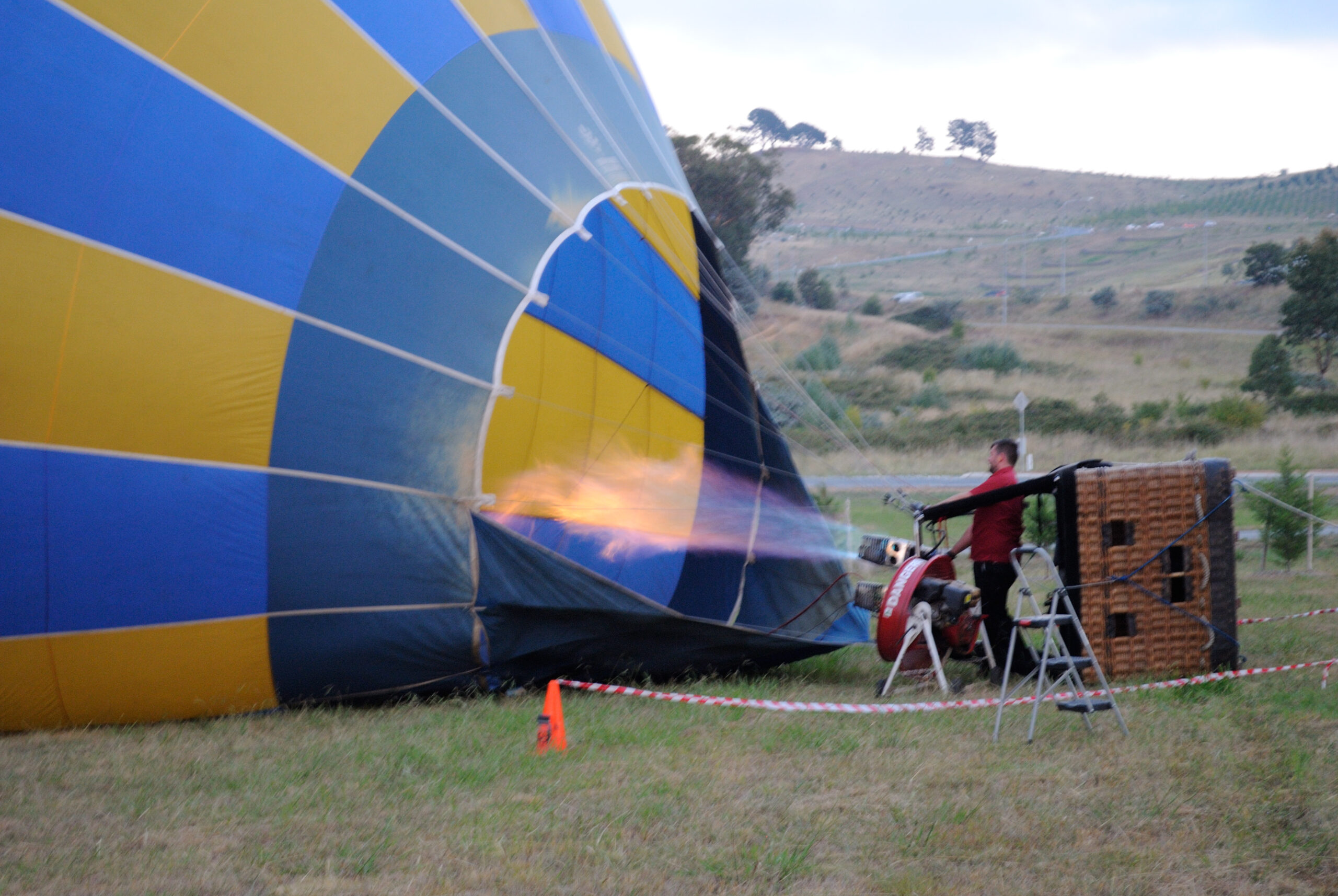
On the day, you can expect the ground crew and pilot to run through a sequence that looks something like this:
- Checking the weather and choosing a launch field large enough to lay out and inflate the envelope, and clear of obstructions.
- Looking over the envelope fabric, the burner system, the fuel supply and the basket as the balloon is rigged.
- Inflating the envelope, first with cold air and then with heat from the burners.
- Briefing passengers before anyone climbs in.
Modern equipment is built with redundancy in mind. Envelopes are made of flame-resistant nylon, and some operators describe dual burner systems, so that if one malfunctions the other can keep the balloon under control. These are descriptions from individual operators rather than universal rules, so equipment details can differ between aircraft.
Watching the set-up is part of the experience. Seeing the checks happen on the ground is, for many passengers, one of the most reassuring parts of the morning.
Which weather conditions keep a balloon on the ground?
Once an operator is properly licensed, the weather is the main factor that decides whether your flight is safe. This is why so many flights are postponed, and why that disappointment is a sign of the system working.
Balloons fly with the wind, so passengers feel almost no breeze in flight. The difficulty is at takeoff and landing, when the balloon meets the ground. For that reason the pilot needs current and forecast conditions with enough visibility to see and avoid obstructions, meaning little or no fog or low cloud, and with winds slow enough to allow a safe launch and landing. One general reference gives a guide of under 5 or 10 mph, depending on the skill and experience of the pilot, passengers and ground crew. A Texas operator asks for calm winds under 8 to 10 mph for launch and landing, and treats any chance of thunderstorms, even 50 miles away, as a reason not to fly.
Those figures are a reminder that limits vary with the operator, the aircraft and the pilot. They are not one universal number. In practice, many pilots use weather apps designed for balloonists, combined with years of local experience, before making the final call.
Timing helps as well. Most launches happen at dawn or a few hours before sunset, when winds tend to be lighter. Flying then also avoids thermals, the rising currents caused by ground heating that make a balloon harder to control. In strong cases, the downdrafts linked with thermals can exceed a balloon’s ability to climb.
What does a passenger briefing cover, and what happens in a rough landing?
The pilot’s safety briefing is not a formality. A good one walks you through the dos and don’ts of the flight and the different kinds of landing that can occur, so that nothing about the descent comes as a surprise. Listening carefully and following instructions helps keep the flight pleasant and safe for everyone aboard.
Landings are the part of the flight where the balloon is least in control, so they get special attention. The pilot adds burner flame to hold altitude and can descend slowly and land safely at any point. Most landings are gentle. If the wind shifts near the ground, the basket may tip or drag a little, and that is why the briefing includes a landing position and why trained crews are on hand to steady things.
Landings are also where the limits of safety rules show up most clearly. A Canadian safety board investigation of a 2007 accident near Winnipeg involved a balloon landing in winds between 10 and 17 knots, much stronger than forecast, after the flight had been extended while the pilot searched for a landing area. The board noted that balloon operators in that period were not regulated at a level comparable to other commercial operators. The lesson is not that ballooning is unsafe, but that wind limits, conservative decisions and a pilot who lands early matter a great deal.
For a fuller picture of what a touchdown feels like, read the article on what really happens when a balloon comes down.
How can you judge an operator before you book?
Because oversight differs from country to country, the quality of the company you choose carries real weight. The Canadian investigation described above found that, at the time, operators there needed only a special certificate with no expiry date and were not audited like other air carriers. That reflects Canada’s system in 2007, not necessarily today, but it shows why a few simple questions are reasonable wherever you fly.
- Ask whether the operator holds the commercial certificate or air operator approval that applies in its country, and whether the pilot holds the matching licence. Reputable companies are happy to show their paperwork.
- Ask how the balloons are inspected and how often.
- Ask who makes the weather decision and what happens if conditions are marginal. A company that postpones readily is behaving the way a cautious one should.
- Check that you will receive a proper safety briefing before boarding.
- Notice how the crew treats the set-up. Organised, unhurried checks are a good sign.
Finally, keep your own role in mind. Follow the pilot’s instructions, hold on during landing, and stay in the basket until told otherwise.
Taken together, licensing, inspection and weather discipline explain why a balloon flight is normally calm. The system works best when passengers choose carefully and accept a postponed morning without complaint.
Related reading
- Success in managing small adventure business operations
- Why hot air balloon sunrise flights are the safest choice
Sources
- How Safe Are Hot Air Balloons? (FAB Safety Guide) (flyawayballooning.com, accessed 2026-11-09)
- Are Hot Air Balloons Safe? What FAA Rules & Pilots Want … (rohrballoons.com, accessed 2026-11-09)
- Aviation Safety Recommendations (bst.gc.ca, accessed 2026-11-09)
- Hot air ballooning — Wikipédia (en.wikipedia.org, accessed 2026-11-09)
Photo: Hot air balloon hot air inflation 1, by Neuroxic, CC BY 4.0 (Wikimedia, via Openverse)
