


Key takeaway: Small adventure businesses can overcome administrative traps by automating key parts of their workloads with tools like Bookinglayer or Trello. This lean approach protects profit margins and guest satisfaction. By outsourcing specialized tasks like accounting or marketing to freelancers, operators can shift focus from manual paperwork to high-touch field safety and core business growth.
Managing a small adventure business without a back-office team often means administrative tasks consume a disproportionate share of your operational time. But can a lean structure actually outperform a traditional corporate setup?
Owners frequently find themselves trapped in manual paperwork and physical filing instead of engaging with guests on the trail. We will explore how automation and strategic outsourcing protect your profit margins while ensuring safety standards remain non-negotiable.
- Core Principles for Managing Small Adventure Business Operations
- 3 Ways to Automate Your Administrative Workload
- When Should You Outsource Specialized Business Tasks?
- Maintaining Safety Standards Without a Dedicated Department
Core Principles for Managing Small Adventure Business Operations
Automation tools like booking software and digital waivers can reduce administrative loads, allowing small adventure teams to prioritize high-touch customer service and lean operational safety without increasing fixed overhead costs.
The focus on lean efficiency directly addresses the common struggle of owners trapped in manual paperwork, which often stifles growth.
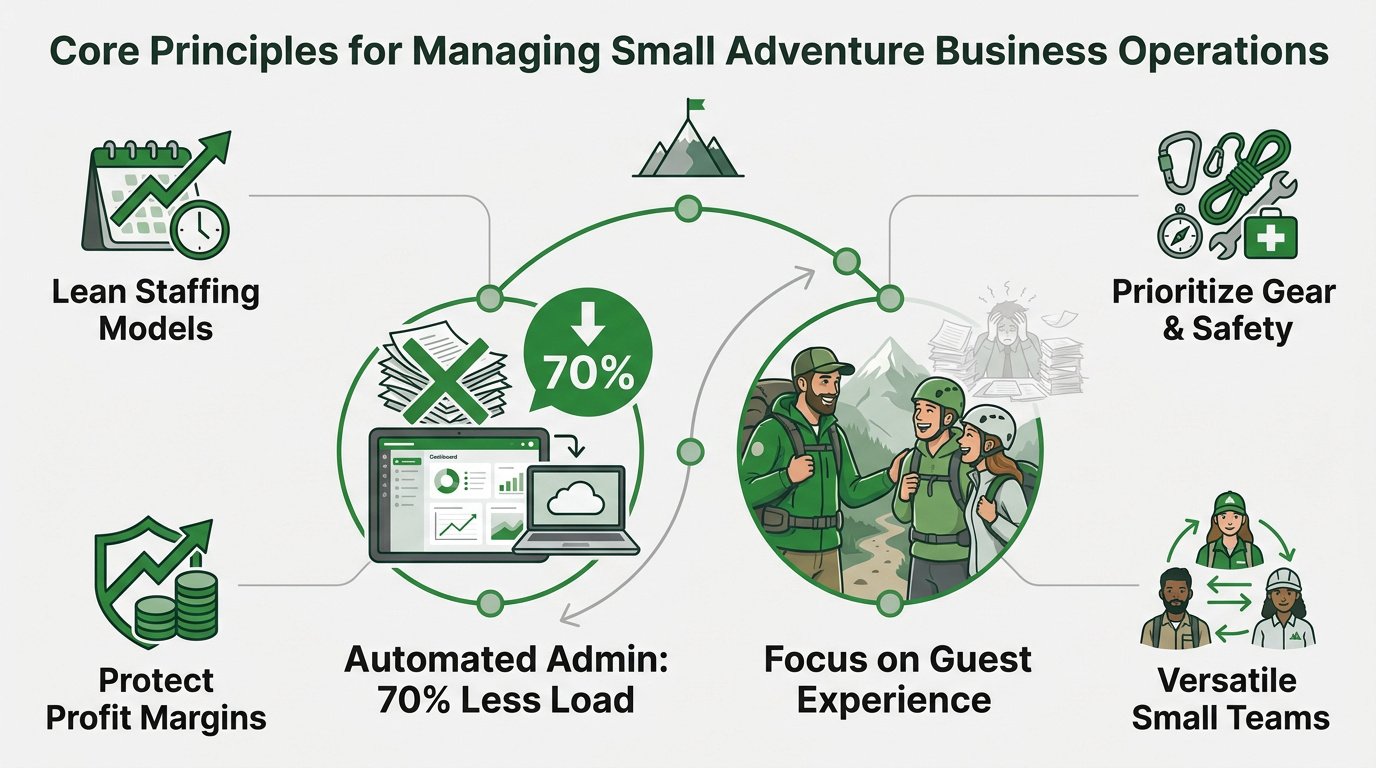
Escaping the Solo Operator Administrative Trap
Manual paperwork suffocates daily field operations. Physical files inevitably slow down guest check-ins. This creates avoidable human errors during peak adventure seasons.
High-quality service remains your primary brand differentiator. Personal interaction drives real loyalty in leisure. Manual tasks steal time from vital guest connections. Focus on faces, not filing receipts.
Administrative fatigue carries a heavy price. Small teams must protect their energy for the field.
Implementing Lean Models to Protect Profit Margins
Keep overhead low while scaling your services. Use flexible staffing to match actual demand. Avoid fixed costs that drain cash during slow off-season months.
Manage staff efficiently in a small-team environment. Cross-train instructors to handle basic front-desk duties. This versatility ensures operations never stall when someone is absent.
Prioritize smart resource allocation. Spend money on gear and safety rather than unnecessary office space or redundant management layers.
Lean operations ensure survival. Profitability depends on agility.
3 Ways to Automate Your Administrative Workload
Moving from lean theory to practical execution requires specific tools that handle the heavy lifting of daily logistics.
Self-Service Scheduling to Kill Manual Booking
Apply automation tools for booking to reduce the administrative load. Let guests choose slots online 24/7. This removes the need for constant phone monitoring. Real-time availability prevents double-bookings and saves hours of manual calendar syncing every single week.
Integrate digital waivers and payment systems to save time on-site. Guests sign documents before arrival. Payments are processed instantly. This streamlines the morning rush and gets groups moving faster.
Digital records are easier to search and store. No more physical binders taking up space in the gear room.
Automation creates a professional first impression. Customers appreciate the speed and clarity of an instant digital confirmation.
Automated Workflows for Guest Inquiries and Follow-Ups
Define micro-tasking windows to handle digital communications between guest interactions. Use ten-minute gaps to clear the inbox. This prevents a massive backlog from forming by the end of the day.
Use auto-responders to maintain responsiveness when the owner is in the field. Set clear expectations for reply times. A simple message acknowledging the inquiry keeps the lead warm and engaged.
Automate post-visit emails to request reviews and feedback. This builds your online reputation without manual effort. Happy guests are more likely to return when prompted by a timely follow-up.
Smart communication keeps the brand alive. Consistency is key to building a reliable community-driven adventure business.
When Should You Outsource Specialized Business Tasks?
While software handles the routine, complex professional requirements often demand a human expert’s touch to avoid costly legal or financial pitfalls.
Hiring External Experts for Tax and Legal Compliance
Identify the right time to hire professional accountants or legal advisors. Complex tax filings are not a DIY project for operators. Experts spot deductions you might miss. They ensure your business stays compliant with local labor and safety regulations.
Balance the cost of external services against the risk of administrative errors. The financial risk of incorrect filings can far outweigh the cost of professional guidance. Peace of mind allows you to focus on growth.
Professional advisors provide a safety net. They handle the high-stakes paperwork that keeps your doors open long-term.
Don’t wait for a crisis to find an accountant. Build these relationships early to ensure a stable financial foundation.
Utilizing Freelancers for Community-Driven Social Marketing
Build a brand presence without spending hours on content creation. Hire a freelancer to edit raw field footage. This keeps your social feeds active while you lead the tours.
Delegate SEO and digital marketing to specialized service providers. Ranking for local keywords requires technical knowledge. Experts can drive traffic while you manage the actual adventure site operations.
Focus on community-driven storytelling rather than technical ad management. Share real guest experiences to build trust. Let the pros handle the backend algorithms and tracking pixels for better results.
Marketing is an investment, not just a cost. Effective outsourcing brings in more guests than it costs to maintain.
Maintaining Safety Standards Without a Dedicated Department
Beyond marketing and taxes, the core of any adventure venue is the rigorous maintenance of equipment and the safety of every participant.
Repeatable Checklists for Equipment and Risk Management
Establish systems for equipment maintenance and safety compliance. Use digital checklists that staff must complete daily. This creates a verifiable paper trail for insurance purposes. Regular inspections prevent gear failure and ensure guest safety remains the top priority.
Secure business continuity through documented protocols when the owner is the primary operator. If you are sidelined, the team must know the exact safety steps. Clarity prevents chaos during emergencies.
Standardize the inspection process to remove guesswork. Every carabiner or harness gets checked the same way every time. Consistency is the best defense against accidents in high-risk environments.
Safety is non-negotiable. Simple systems protect your guests and your professional reputation.
Managing Seasonal Cash Flow and Staffing Shifts
Plan for revenue fluctuations using seasonal retention strategies. Offer early-bird discounts for the next season. This secures upfront cash flow during the slower winter months for better stability.
Improve customer loyalty through repeatable experiences and seasonal updates. Change the route or the theme to keep locals coming back. Fresh content encourages repeat visits and word-of-mouth marketing.
Adjust staffing levels based on booking data. Use your automated scheduling software to predict busy weekends. This prevents overstaffing and keeps your labor costs aligned with actual revenue.
Financial planning is about foresight. Use the quiet times to refine your systems and prepare for the next rush of adventurers.
Mastering adventure business operations requires balancing lean efficiency with smart automation. By implementing digital booking tools and outsourcing specialized administrative tasks, you protect your profit margins and focus on guest safety. Start automating today to reclaim your time and ensure long-term scalability. Efficiency is the ultimate fuel for your next growth phase.
FAQ
How can I manage my adventure business back-office without a full-time team?
Managing operations solo or with a small crew is entirely possible by leveraging external experts and freelance office managers. These professionals help identify your real administrative needs, establish scalable processes, and prioritize tasks without the overhead of permanent staff.
By outsourcing functions like accounting, legal compliance, or specialized digital marketing, you gain access to high-level expertise only when you need it. This flexibility allows you to maintain a lean structure while ensuring that critical “behind the scenes” work doesn’t fall through the cracks.
What are the best tools to automate administrative tasks in the adventure sector?
Small operators can significantly reduce their workload by using integrated software solutions like IPaidThat for automated expense tracking and Trello for collaborative task management. For a more comprehensive approach, an ERP like Cegid can centralize various business processes into one platform.
Specialized adventure booking platforms are also vital. They automate online reservations, digital waivers, and real-time equipment availability, which eliminates manual data entry and reduces human error during your busiest seasons.
Is it possible to handle guest inquiries 24/7 without an office assistant?
Yes, modern AI agents and automated responders can manage customer communications around the clock. These tools can be integrated with platforms like WhatsApp to answer common questions, check availability, and even send payment links instantly while you are out in the field.
Using these automated workflows ensures that leads stay engaged and feel supported, even when you are physically leading a tour. This maintains a professional brand image and prevents potential customers from turning to competitors due to a slow response.
When is the right time to outsource my business’s financial and legal tasks?
You should consider outsourcing as soon as manual paperwork starts to interfere with your ability to serve guests or when tax filings become too complex for a DIY approach. Hiring a professional accountant or legal advisor provides a safety net against costly compliance errors and fines.
Building these relationships early ensures a stable financial foundation. The cost of a monthly retainer for an expert is often much lower than the long-term financial impact of administrative fatigue or incorrect regulatory filings.
How does automating the back-office improve the actual guest experience?
Automating routine tasks like check-ins and payments streamlines the arrival process, getting groups into their gear and out on their adventure faster. When the “paperwork” is handled digitally before arrival, it removes friction and creates a seamless first impression for the customer.
More importantly, reducing your administrative load frees up your energy to focus on high-touch customer service. Instead of being stuck behind a desk filing receipts, you and your team can spend more time building personal connections and ensuring guest safety.
