
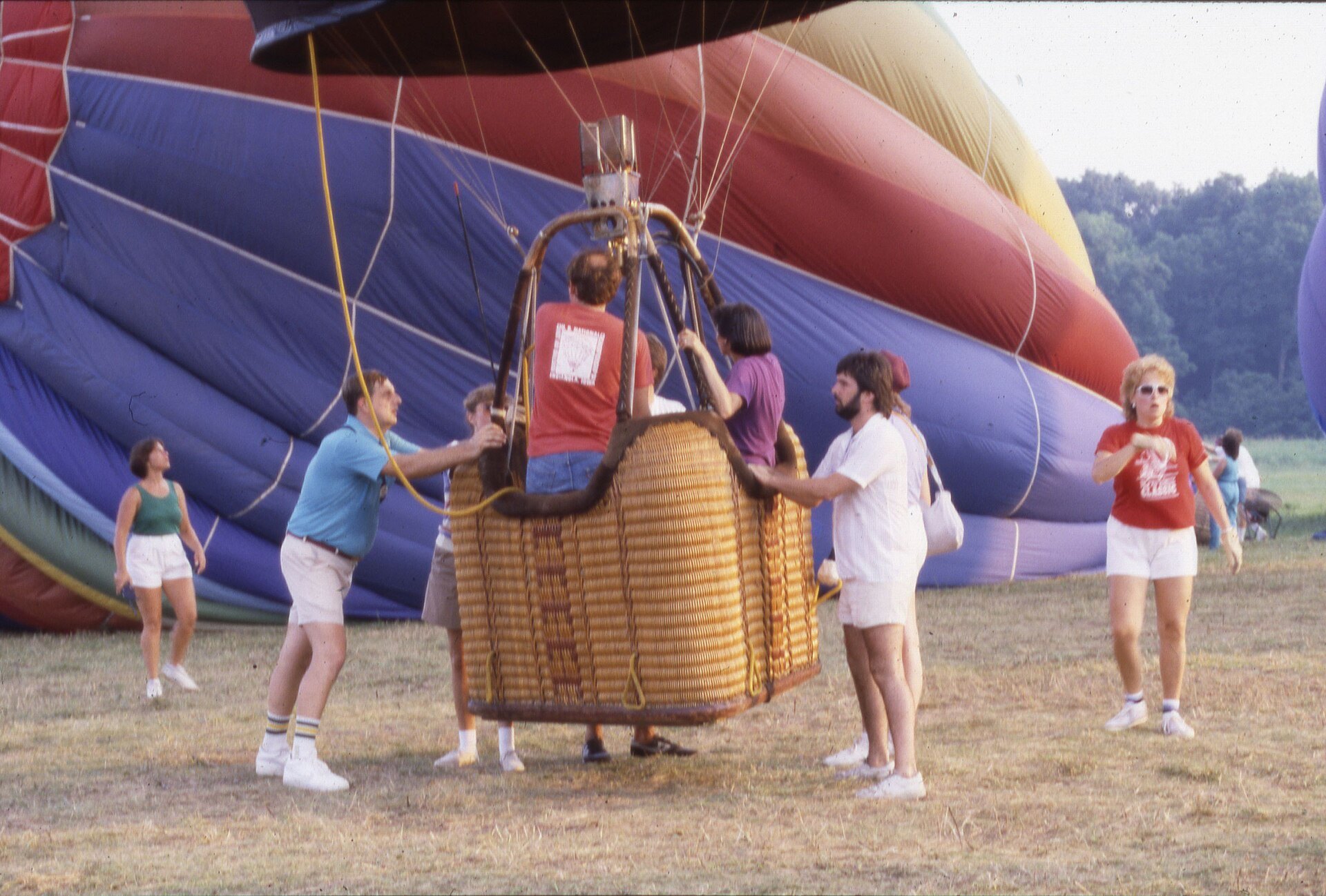

Every season we get the same question from readers who have just booked their first flight: what on earth do I wear? A balloon flight puts you in an odd mix of conditions in a very short time. You stand in a cold field before dawn, you feel the burner throw heat onto the back of your neck, you drift through still air at a few hundred meters, and then you help fold a nylon envelope in wet grass. The trick is to think in layers rather than outfits.
Start with the ground, not the sky
Most first-time passengers assume it gets much colder as the balloon climbs. In practice the air temperature drops by roughly two degrees Celsius for every 300 meters of altitude, and most passenger flights cruise between 150 and 900 meters. That means the difference between the launch field and your cruising height is often only a few degrees. What you notice far more is the temperature at dawn on the ground. Balloons fly in the first two hours after sunrise because the air is calm then, and that is also the coldest part of the day. The launch field is often five to ten degrees colder than the afternoon forecast.
So the rule we repeat to everyone: dress for the field at dawn, not for the flight. If you are comfortable standing still in a damp meadow at six in the morning, you will be comfortable in the basket. Once you are airborne there is almost no wind chill, because the balloon moves with the air. On a sunny morning many passengers find themselves peeling off a layer within twenty minutes.
The burner changes everything above your shoulders
The one thing no other outdoor activity prepares you for is the burner. It sits a meter or so above your head and throws a flame several meters long, and every burn releases a wave of radiant heat onto the top of your head and your shoulders. It is not dangerous, but it is surprising the first few times, and it is the reason experienced passengers wear a hat. A simple cap or a brimmed cotton hat takes the edge off the heat and also shields your eyes from a low sun. Choose one that fits snugly, because you will be leaning out to look down and hats do go overboard.
The burner is also why we tell people to leave scarves at home. A loose scarf, a long shawl or any fluttering fabric near the burner is a bad idea, and pilots will politely ask you to tuck it away. Keep your neck warm with a high collar, a snug neck gaiter or a zipped fleece instead.
Shoes are the part people get wrong
If you take one thing from this article, let it be this: wear closed, flat, sturdy shoes that you do not mind getting dirty. Launch and landing fields are farmland, and farmland in the morning is wet, muddy, uneven and sometimes full of cow evidence. Landings can involve a couple of bounces and a short drag if there is any breeze, so you want ankle support and a sole with grip. Trainers or light hiking shoes are ideal. Wellington boots are fine if they fit well. Sandals, heels and anything open-toed are not, and some pilots will refuse to carry a passenger in them.
Trousers matter for the same reason. Long trousers protect your legs during landing and while walking through crop stubble or long grass. Jeans are fine, walking trousers are better, shorts are a poor choice even in summer.
Season by season
In spring, expect the widest swing. Fields are wet, mornings are close to freezing in northern latitudes, and by the time you land the sun can be warm. A base layer, a fleece and a light waterproof shell work well, with a beanie in your pocket for the field and a cap for the burner. Gloves are worth having for the first half hour.
Summer is the easiest season and also the one where people overdress. A long-sleeved shirt over a t-shirt, long trousers and a cap will do for most temperate flights. Bring a light jacket for the pre-dawn wait. In hot regions such as central Turkey, the American Southwest or East Africa, mornings are surprisingly cool even in July, so do not skip the jacket. Sunscreen matters more than you think, because you will be in open sun for two or three hours with no shade at all.
Autumn is the classic ballooning season in Europe and North America, with stable air and clear skies. Dress much as you would for spring, but expect heavier dew and mist in the field. A waterproof outer layer earns its place in the bag.
Winter flights are less common but wonderful, with crisp air and long views. Dress as you would for a winter walk: thermal base layer, insulated mid layer, windproof shell, warm hat, gloves and thick socks. The burner will feel like a gift. You cannot walk around to warm up in the basket, so err on the side of too warm.
The short checklist
Here is what we pack ourselves, whatever the month.
- Closed, flat, grippy shoes that can get muddy
- Long trousers, ideally not your favourite pair
- Three thin layers rather than one thick coat
- A cap or brimmed hat for the burner and the sun
- Gloves in any season except high summer
- No scarf, no dangling straps, no loose hood cords
- Sunglasses on a cord and sunscreen applied before launch
A few practical extras
Leave jewellery that could catch on the basket rim at home, and keep phones and keys in a zipped pocket rather than a loose one. Basket floors are wicker or plywood and things do drop through gaps. If you wear glasses, a simple retaining strap is cheap insurance. Pregnant passengers and anyone with back trouble should ask the operator about landing positions before deciding what to wear, because the crouch on landing is easier in flexible clothing.
Finally, think about the end of the morning. Most flights finish with a walk across a field, a hand with the envelope and a toast in the sun. If you dressed for the dawn, you will be shedding layers by then, so bring a small bag to stuff them into. Comfort on a balloon flight is not about the sky at all. It is about the field, the burner and your feet, and if you get those three right the rest takes care of itself.
