
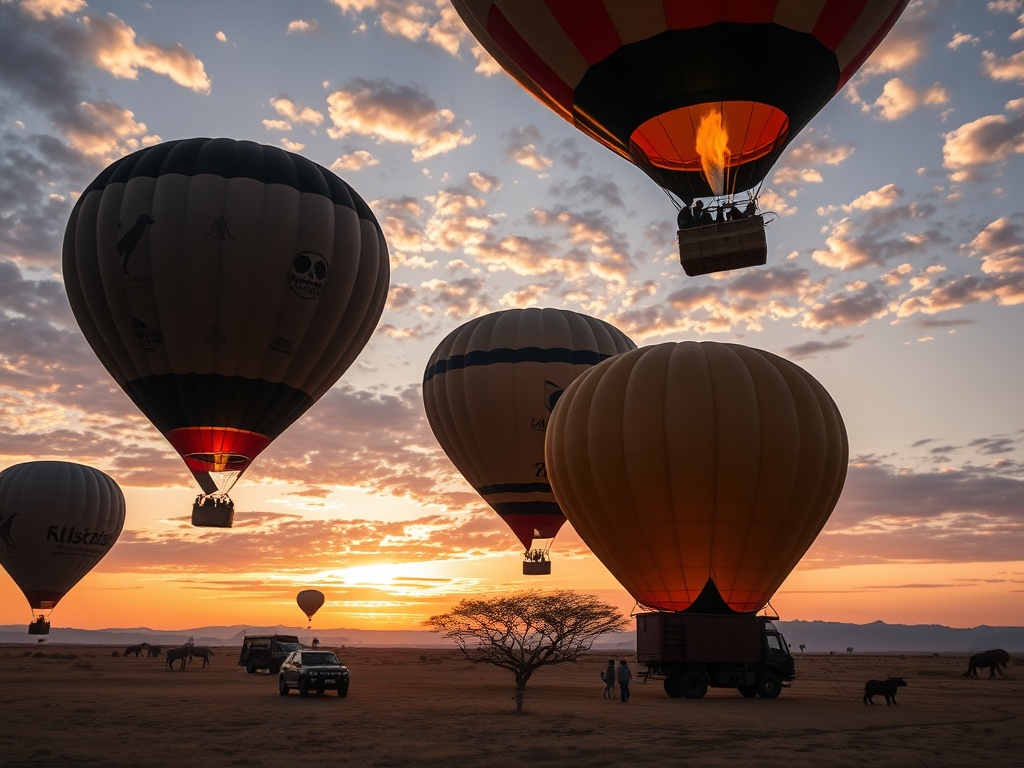

First Light Over the Maasai Mara
As the first golden rays stretch across the Kenyan plains, a hushed silence envelops the savannah. The dew glistens on acacia trees, and distant silhouettes of giraffes trace the horizon. It’s in this magical moment — just before sunrise — that our hot air balloon begins to rise, lifting gently off the ground like a whisper on the wind.
Floating above the wild heart of Africa, time seems to pause. Below us, herds of wildebeest stir to life, and elephants begin their slow, deliberate march across the golden grass. The vibrant colors of dawn paint the sky in hues of pink, amber, and lavender — a spectacle that photographs can only hope to capture.
Meeting the Pilots: Passion in Every Altitude
Behind every flawless flight is a pilot with stories to tell. I had the chance to speak with Daniel, a veteran balloonist with over a decade of experience flying across Africa.
“Kenya offers something unique,” Daniel tells me. “The wildlife, the culture, and the light — it changes everything. Every flight is different, and that’s what keeps the magic alive.”
His favorite moment? “When the burners go silent and all you hear is nature waking up. That silence is sacred.”
What to Expect on Your Balloon Safari
For those dreaming of this bucket-list experience, here’s what you can expect during a sunrise balloon flight in Kenya:
- Early Wake-Up Call: Most journeys begin around 4:30 AM to ensure you’re airborne before sunrise.
- Pre-Flight Coffee: A warm cup of Kenyan coffee or tea awaits as the balloon is inflated nearby.
- Flight Duration: Typically 45 minutes to 1 hour, depending on wind conditions.
- Champagne Breakfast: After landing, guests are treated to an open-air breakfast in the bush — a truly unforgettable touch.
Dress in layers; mornings can be chilly, but the sun warms the air quickly. And don’t forget your camera — but more importantly, be present. Some moments are best captured with the heart.
Why Kenya? Why Sunrise?
The Maasai Mara is renowned for its rich biodiversity and vast open spaces. But it’s the light at dawn that transforms this landscape into something ethereal. The clarity of the air, the soft shadows, and the gentle breeze all combine to create the perfect conditions for ballooning.
Sunrise is more than just a backdrop — it’s a character in this story. It breathes life into the land and sets the tone for the day. Watching it unfold from above is a privilege few forget.
When to Go: Seasons and the Great Migration
The Mara sits at 1,500 to 1,900 meters above sea level, which explains the crisp mornings: expect 10 to 14 degrees Celsius at the launch site and 25 to 28 by mid-afternoon. Flights operate all year, but the character of what you see below changes completely with the calendar. The long rains fall from late March to May, when some tracks close and a few camps shut; the short rains arrive in November. The prime window is the dry season from late June to October, when the grass is short, the game concentrates near water and the skies are clear enough that weather cancellations drop below one flight in ten.
This is also when the Great Migration is in Kenya. The wildebeest and zebra herds, well over a million animals, push north out of Tanzania’s Serengeti in June and July, crossing the Mara River in dramatic, chaotic surges from late July through September before drifting back south in October and November. In the Serengeti the rhythm is reversed: the herds gather on the southern short-grass plains around Ndutu from December to March for the calving season, and the northern crossings are best from July to October. Balloon flights there follow the herds, launching in the central Seronera area year-round and in the north or the south according to the season.
The Practical Details We Wish We Had Known
Safari ballooning is the most expensive form of the sport, at roughly 450 to 600 USD per person in the Mara and slightly more in the Serengeti, largely because the balloons operate inside protected reserves that levy their own fees and because every flight needs a convoy of vehicles waiting in the bush. The balloons are among the largest flown anywhere: baskets carry 8 to 16 passengers in separate compartments, and weight limits of around 120 kilograms per person are checked at the weigh-in the evening before. Launch sites sit close to the Mara River in the west of the reserve and in the Mara Triangle, chosen because the prevailing easterly breeze carries the balloon over the richest game country.
- Flight altitude alternates between a few meters above the acacia canopy, to watch animals at close range, and 300 meters or so for the panorama.
- Landing is wherever the wind decides, usually a grassy plain; the basket may tip and slide, and you stay seated until the crew arrives with the vehicles.
- The bush breakfast is served on the spot, often with a spotted hyena or two watching from a polite distance, and the drive back doubles as a game drive.
Book before you leave home in migration season, when flights sell out weeks ahead, and give yourself two mornings in the reserve so that a single windy dawn does not cost you the experience.
Final Thoughts: A Moment Suspended in Air
Soaring above Kenya at dawn is not just an adventure — it’s a meditation in motion. It’s where thrill meets tranquility, and where nature reveals its most intimate side.
Whether you’re an avid traveler, a wildlife enthusiast, or simply someone seeking a moment of awe, a sunrise flight over the Maasai Mara is an experience that will stay with you long after you’ve touched down.
Up here, in the silence and the light, the world feels both vast and beautifully connected.
